 (Image source: Gemini)
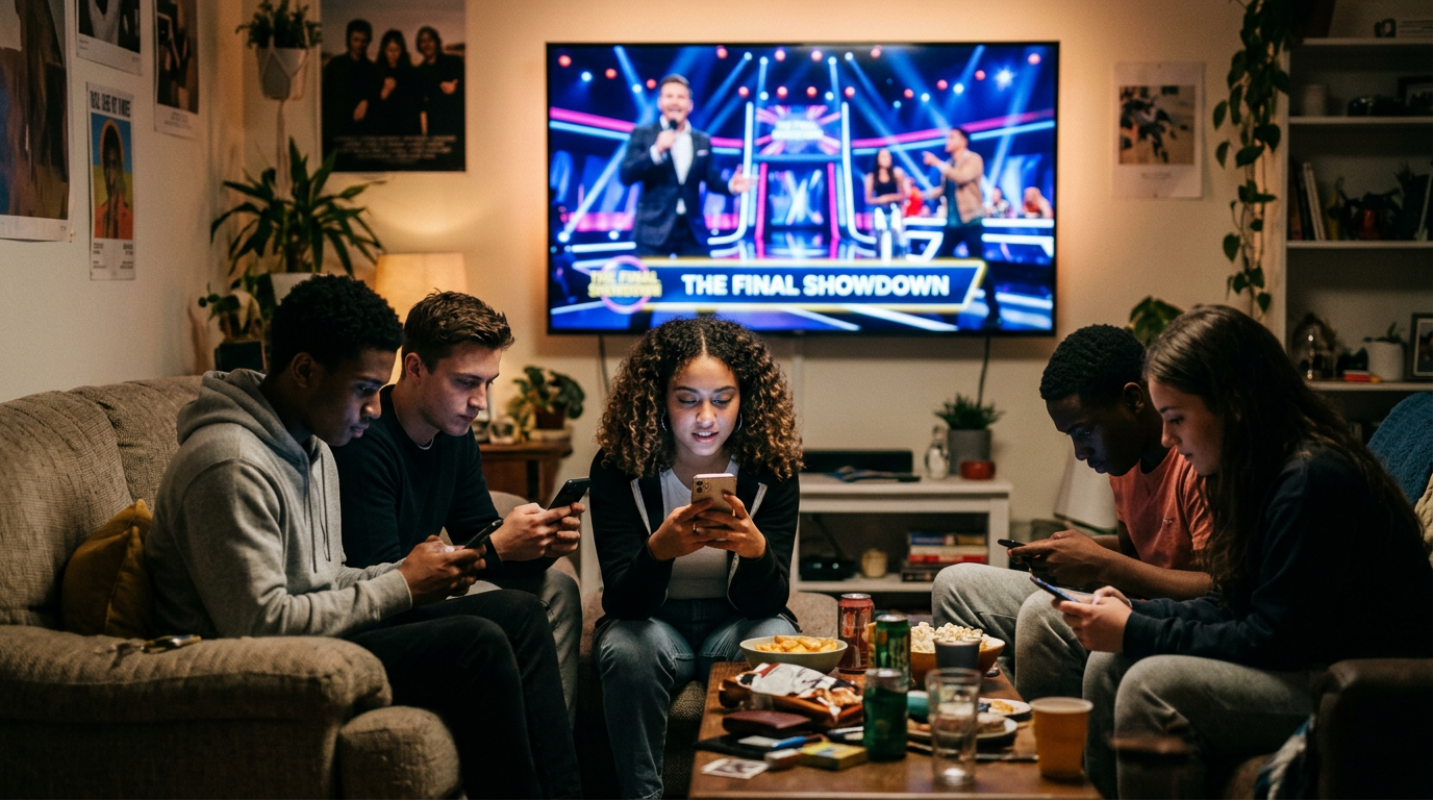
 TV as we once knew it is on life support for anyone under the age of thirty. It’s not just that the shows have changed. It’s that the way we live has fundamentally shifted. For Gen Z and the rising Gen Alpha, the idea of waiting a week for a new episode feels like a relic from the Stone Age. Why would you sit through forty minutes of filler and commercials when you can get the highlights in a three-minute TikTok recap? The disconnect is real. Traditional reality competition formats are built on a slow-burn model that simply doesn’t mesh with the digital-first brain. We’re seeing a massive exodus from broadcast TV. Recent data shows that less than 48% of 16 to 24-year-olds even tune into broadcast TV during an average week. That’s a massive drop from where things stood just a few years ago.
Slow Pacing No Longer Works
Have you ever tried to watch a legacy reality show recently and felt the urge to double-tap the screen to skip forward ten seconds? That’s the TikTok effect in action. Our attention spans haven't necessarily disappeared, but our tolerance for boredom has plummeted. Traditional episodic structures are often bloated with "coming up" teasers and repetitive recaps that take up a third of the runtime.
Younger audiences are moving toward "clip culture." They aren't watching the full sixty-minute broadcast of a singing competition. Instead, they’re catching the three-minute viral audition on YouTube or a fiery confrontation on their TikTok "For You" page. When 43% of Gen Z says they prefer YouTube and TikTok over any paid streaming service, the writing is on the wall.
The editing style of social media has also made traditional TV look incredibly dated. Think of it like this. TikTok is fast, jumpy, and gets straight to the point. Traditional TV feels like a long, winding road with too many stop signs. When you’re used to the high-octane energy of a creator-led challenge, a standard episode of a network competition feels like it’s moving through molasses.
Authenticity vs. Produced Narratives
There’s another big problem. Younger viewers are arguably the most media-literate generation in history. They can spot a "producer-led" conversation from a mile away. You know the ones. Two contestants sit on a bench and conveniently start talking about their "journey" just as the cameras zoom in. To a twenty-year-old in 2026, that doesn't feel like reality. It feels like "cringe."
Gen Z craves what some call "perceived reality." They want things to feel raw, messy, and unpolished. This is why they gravitate toward influencers and streamers. When a Twitch streamer messes up, it’s live and unedited. When a reality TV contestant messes up, it’s usually edited with ominous music and three different reaction shots. It feels manufactured.
Even the contestants themselves are changing the game. Former stars like Rachel Lindsay have pointed out that new contestants often enter these shows with a "brand-first" mentality.² They aren't there to find love or win a prize. They're there to secure a clothing line deal. This makes the stakes feel hollow. If everyone is just acting a part to gain followers, why should you care who wins?
The Rise of Niche and Interactive Alternatives
So, where is everyone going? They’re moving toward platforms that let them participate rather than just watch. We’re seeing a huge rise in gamified content. Shows like The Circle or Squid Game: The Challenge on Netflix have managed to keep a foothold because they feel more like a video game than a pageant. They use interfaces that younger viewers recognize from their own digital lives.
Then you have the creator-led revolution. Take Beast Games on Prime Video. It’s a massive reality competition, but it’s led by MrBeast, a face that younger audiences actually trust. It bridges the gap between the high production values of Hollywood and the raw energy of YouTube. It’s not just a show. It’s an event that lives across every social platform simultaneously.
Interactive live-streaming is also stepping up. New formats like The Series, which launched on Twitch recently, allow viewers to vote on twists in real-time through a chat box. It’s the digital equivalent of being in the room. Why be a passive observer when you can be the one who decides who gets eliminated?
Can Legacy Shows Adapt or Are They Fading Out?
Does this mean the end for the heavy hitters? Not necessarily, but they are having to get creative. We’re seeing a trend called "Traitor-ization." This involves taking the best parts of various shows and smashing them together into a "Reality Multiverse." The Traitors is the gold standard here. In its recent celebrity versions, it managed to capture a staggering 81% of the 16 to 24-year-old linear TV audience.
The show works because it’s high-stakes, it’s smart, and it’s incredibly "meme-able." Every episode produces a dozen moments that are perfect for social media sharing. It doesn't fight against clip culture. It feeds it. Other shows are trying to follow suit by casting established influencers who bring their own built-in audiences with them.
We’re also seeing brands take matters into their own hands. Tinder recently launched Double Date Island, a social-first reality series that lived entirely on TikTok and YouTube. It didn't need a TV network. It went straight to where the audience was and racked up nearly 180 million impressions.⁴
The future of the genre likely won't be found on a broadcast schedule. It’ll be fragmented. We’ll have the "prestige" reality shows for older cohorts who still enjoy the weekly ritual, and then a wild, chaotic world of interactive, short-form competitions for everyone else. The "water cooler" isn't gone. It’s just moved into a billion different Discord servers and group chats.